
Clark County Criminal History Checks
A useful Clark County criminal record check begins by naming the record, not just the person. Odyssey carries Clark County Superior Court case activity. Washington Courts adds a broad index for trial courts. Clark County District Court keeps its own limited-jurisdiction files, while Jail Services publishes a current custody register. WATCH supplies the Washington State Patrol public conviction-history product. Each source answers a different question, so one clean result should not be treated as proof that no other record exists.
Gather a full legal name, date of birth, former names, and any known case or report number. Spelling matters. Then work from the event source toward the final outcome. That order keeps a booking allegation from being mistaken for a conviction.
- Search Odyssey for a Clark County Superior Court felony case and Washington Courts for other case references.
- Ask District Court or the correct municipal court about misdemeanor, criminal traffic, and city matters.
- Use the jail roster only to check current or recent Clark County custody.
- Request the incident or arrest narrative from the law enforcement agency that created it.
- Run WATCH for the statewide public history, then obtain fingerprints when a name match must be confirmed.
Clark County Records Campus
Downtown Vancouver has several record counters, and they are easy to confuse. The Clerk holds permanent Superior Court files at the Clark County Courthouse, 1200 Franklin Street. District Court moved to 210 E. 13th Street in February 2026. The Sheriff, Criminal Records Unit, Main Jail, and sex-offender registration functions use the law-enforcement campus at 707 W. 13th Street. Probation and Pretrial Services now work from Suite 160 in the Public Service Center at 1300 Franklin Street.
The Clark County Sheriff's Office service page shows how sheriff functions are routed.
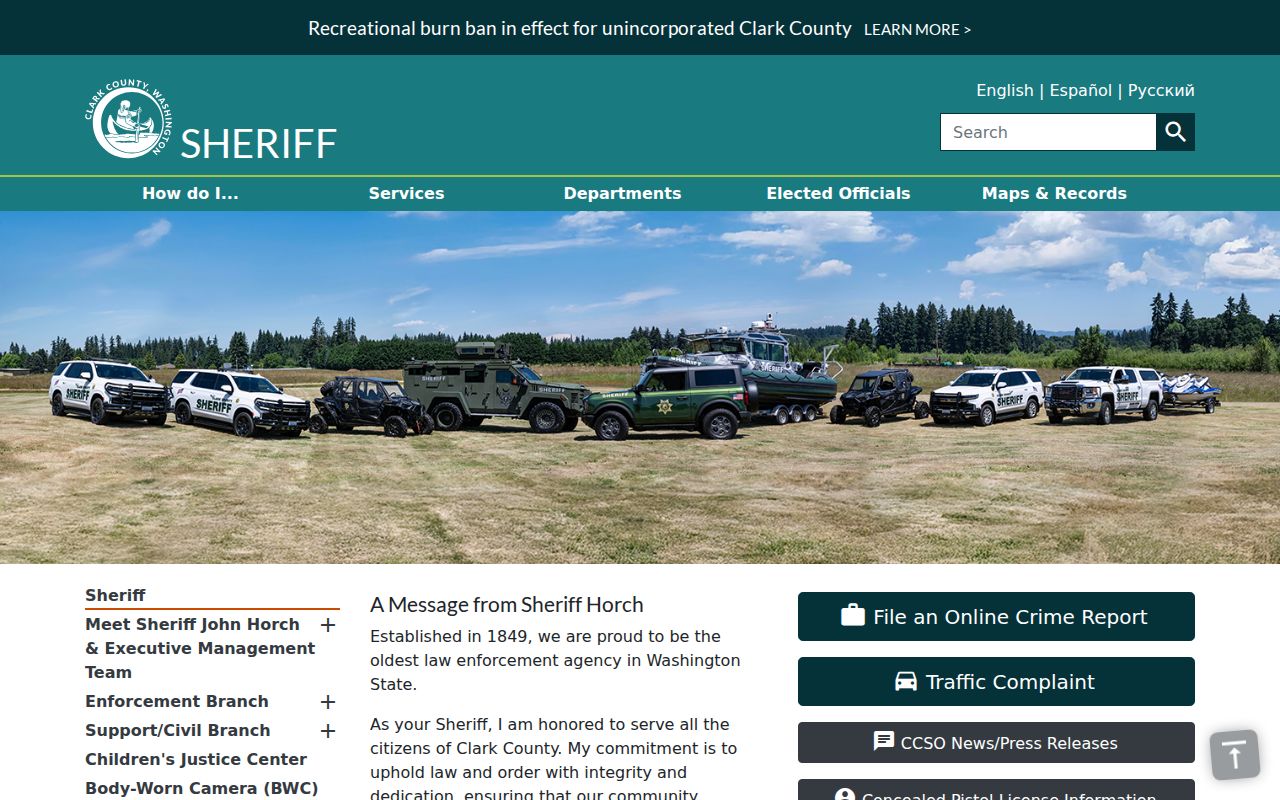
The page points to reports, records, warrants, and registration services, but it does not replace the Clerk's court file or the Jail Services register.
Note: Older directions may still send District Court visitors to its former location, so confirm the destination before leaving.
Official Background Checks in Washington
Washington Access to Criminal History, known as WATCH, is the Washington State Patrol's public name-and-date-of-birth product. Public output includes Washington conviction information, registered sex or kidnap offender information, and certain arrests less than one year old while disposition is pending. It generally does not release public nonconviction information. The online fee is $11. A mailed name request costs $32, and the current fingerprint-based request costs $58 plus the cost of collecting prints.
For a review of one's own identity-verified Washington record, obtain a fingerprint card and send the WSP form to the Criminal Records Division. WSP accepts mailed fingerprint requests. Local law enforcement may collect prints, and WSP provides collection in Olympia for $16. The FBI Identity History Summary is a separate subject-only federal option. It does not replace Clark County court records or WATCH.
| Official product | Current charge | Main limit |
|---|---|---|
| WATCH online name and DOB | $11 | A shared name is not positive identification |
| WATCH mailed name and DOB | $32 | Washington public-history scope |
| WSP fingerprint record | $58 | Fingerprint collection costs extra |
| WSP Olympia fingerprint capture | $16 | Collection only, not the record fee |
Clark County WATCH Identity Checks
WATCH asks for last name, first name, date of birth, requester details, and payment. A middle name is optional but can narrow common-name results. The response may be a candidate list, a no-record or no-exact-match message, or a possible duplicate match. None is the same as fingerprint confirmation. WSP warns that missing agency transmissions, pending entry, other spellings, and nonpublic information can affect what appears.
The official WATCH search screen shows the name and birth-date route used for Clark County criminal history checks.
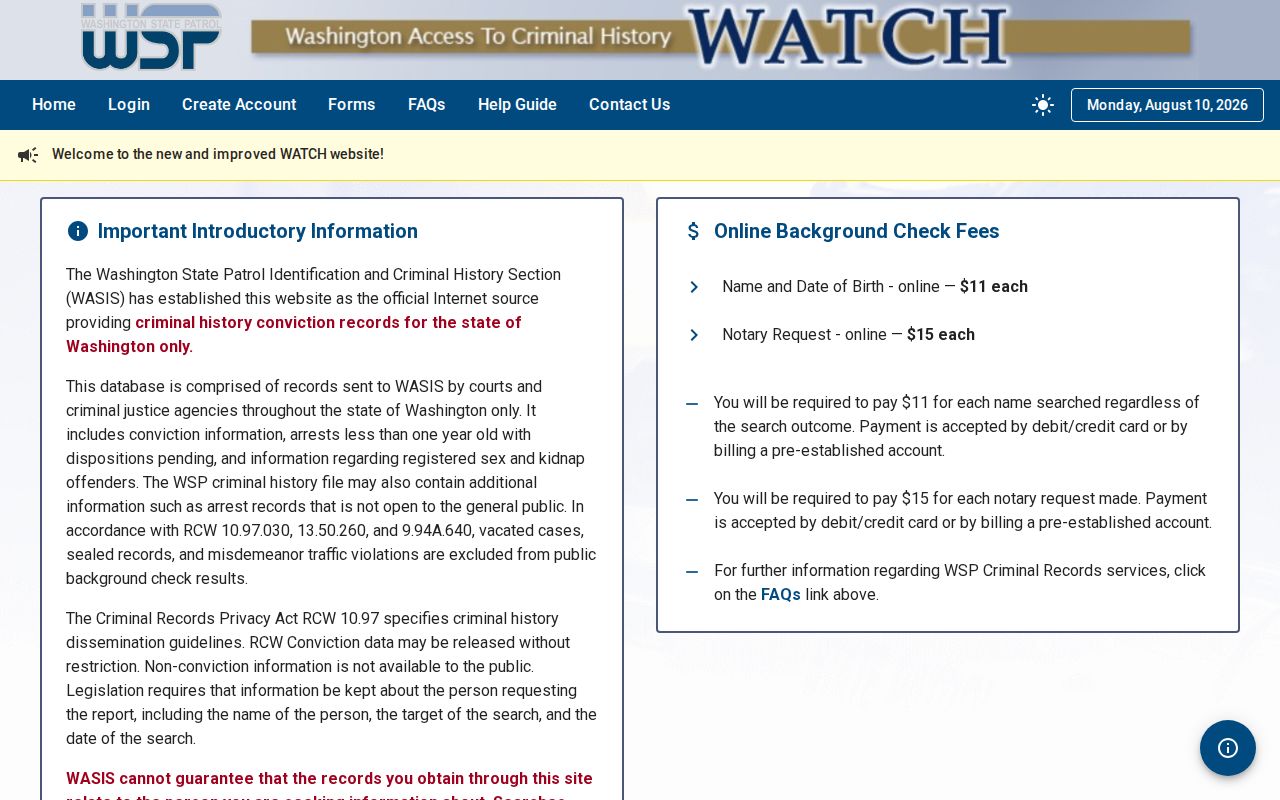
The visible fields make it clear why a complete date of birth and correct legal spelling improve a search, while fingerprint comparison is still needed for a positive match.
| WATCH field | Required | Search use |
|---|---|---|
| Last and first name | Yes | Starts the candidate search |
| Middle name | No | Helps separate close matches |
| Date of birth | Yes | Narrows name matches |
| Requester and payment | Yes | Tracks the inquiry and pays the fee |
Note: A WATCH no-match does not rule out a local report, a recent court filing, an out-of-state event, or restricted nonconviction data.
Kinds of Criminal Records
Clark County agencies create records at different steps. Police and deputies write incident and arrest reports. Jail Services records intake and current custody. Prosecutors decide which charges to file. Court clerks preserve dockets, orders, pleas, judgments, and sentences. WSP tries to connect fingerprinted arrest cycles with reported court dispositions in WASIS, then releases only the lawful public subset through WATCH.
The record holder sets the request route. These five groups cover most Clark County criminal history searches:
- Incident and arrest reports: request them from CCSO, a city police department, WSP, or the agency that responded.
- Booking records: use the Jail Services public register for its limited custody fields.
- Court case files: use the Clerk, District Court, or the correct municipal court.
- Repository history: use WATCH for public Washington conviction history and fingerprints for identity certainty.
- Supervision and registry data: use local probation, Washington DOC, or the sheriff-administered registry as the record requires.
Federal cases form another layer. Clark County lies in the Western District of Washington, so federal dockets use PACER and federal custody uses the Bureau of Prisons locator.
Clark County Warrant Record Gaps
Clark County has no complete public name-search warrant portal in the reviewed official sources. The Criminal Records Unit enters and confirms wanted-person information and takes calls at (564) 397-2211 on weekdays from 8 a.m. to 5 p.m. Option 3 is for information about a wanted person. It is not a promise that staff can give personal legal advice or disclose a sealed warrant.
The sheriff's Criminal Records and Warrants page is the official starting point.
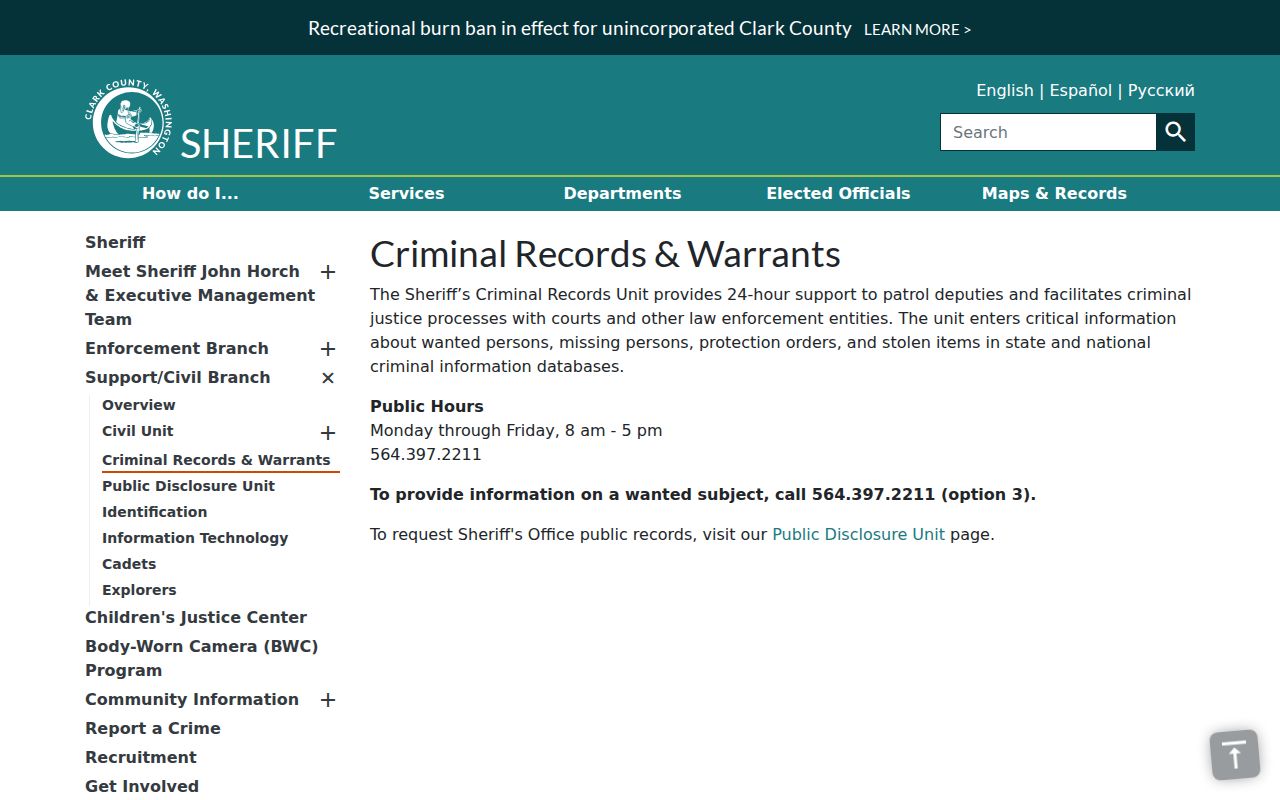
When no public result appears, check the docket for a warrant event and call the exact issuing court. Superior Court, District Court, Vancouver-related District Court matters, Battle Ground Municipal Court, and Camas-Washougal Municipal Court do not share one public warrant list. Ask for the case number, warrant type, bail or hold status, and appearance instructions. Clearance should be confirmed after the court transmits it to law enforcement.
Warrant caution: Payment alone may not clear a warrant. Get instructions from the issuing court or qualified counsel before trying to resolve it.
Clark County Records: What They Contain
A full rap sheet organizes data around identity and fingerprinted arrest cycles. It can carry aliases, birth date, physical descriptors, state and FBI identifiers, arrest dates, agencies, arrest charges, court numbers, dispositions, sentences, and custody data. Clark County source records are narrower. Odyssey stresses the case and docket. The jail roster stresses booking and housing. A police report adds the officer's narrative and evidence details, often with lawful redactions.
| Name and identifiers | Legal names, aliases, birth details, and fingerprint-linked numbers where the record lawfully shows them |
|---|---|
| Arrest and booking | Agency, dates, alleged charges, county file number, intake, housing, and release fields that vary by source |
| Court charges | Filed counts, statute, degree or class, offense date, and status for each count |
| Disposition | Dismissal, plea, verdict, or other recorded result, read count by count |
| Sentence | Custody, conditions, restitution, assessments, and supervision stated in the judgment |
| Restrictions | Masked personal data and sealed, juvenile, victim, medical, or investigative material |
A booking charge is preliminary. A filed court charge may differ, and the final result may differ again. For that reason, the Clark County court case lookup is the place to trace the judicial outcome after an arrest.
Clark County Custody Record Paths
The Clark County jail roster is a live public register, not a complete inmate profile. Its searchable grid shows CFN, name, booking date, location, release date, and short charge text. It does not display a mugshot, date of birth, bond by charge, warrant number, judge, next court date, or final disposition. Call the 24-hour custody line at (564) 397-4996 when a row is unclear. Most other confined-person records are confidential under RCW 70.48.100.
State-sentenced custody belongs to Washington DOC, not the county jail. The DOC Incarcerated Individual Search is the official state route.
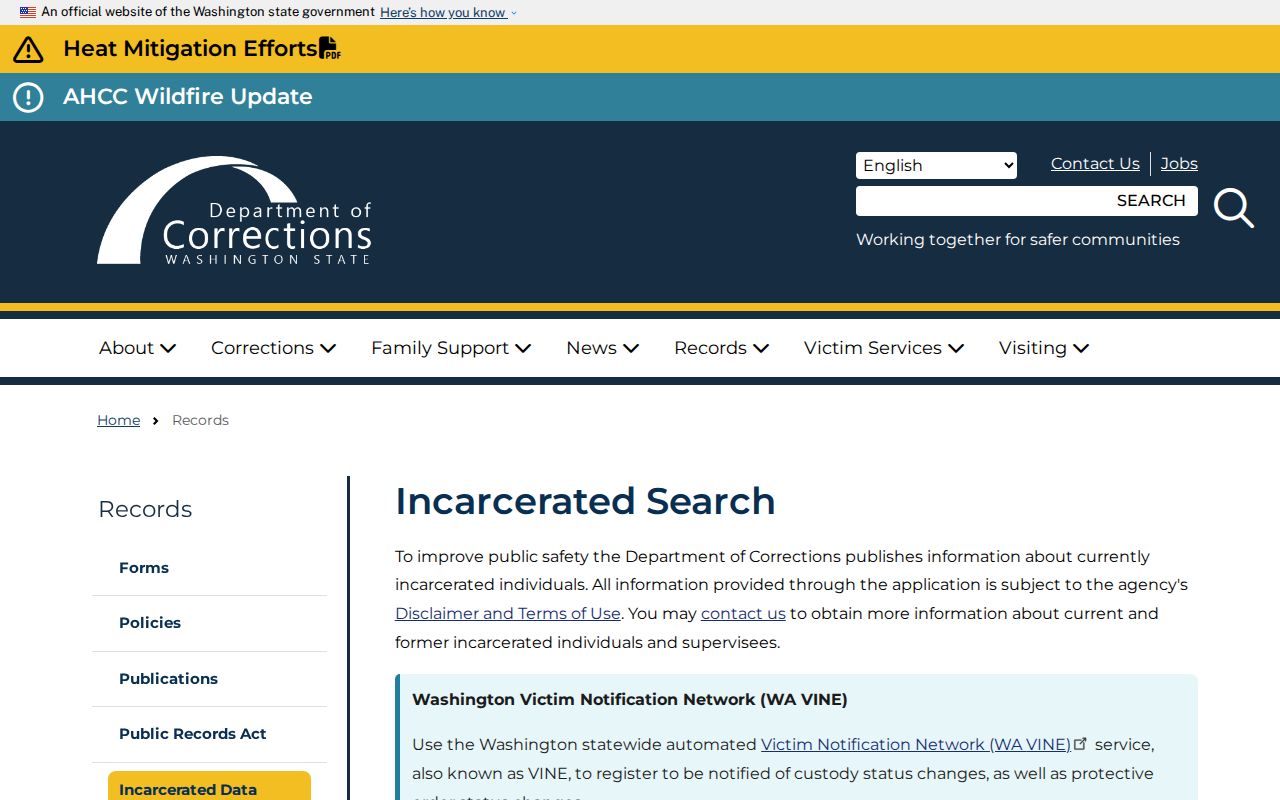
The DOC locator accepts a DOC number or a first and last name and returns basic state-custody details. Federal custody uses the Bureau of Prisons locator. VINE can send custody notices, but it warns that it cannot guarantee advance notice of release.
Note: A roster release date is not an exact exit time because court processing, security, and jail workload can cause delays.
Washington Public Access Laws
Public access turns on both the record and its custodian. Agency reports fall under the Washington Public Records Act. Court case records follow General Rule 31, while court administrative records follow GR 31.1. The Criminal Records Privacy Act separates conviction data from nonconviction data and controls dissemination and correction. Jail law permits a public register but protects most other confined-person files.
Key Washington authorities:
Chapter 42.56 RCW permits access to nonexempt agency records and sets the five-business-day initial response rule.
Chapter 10.97 RCW governs criminal-history dissemination, nonconviction data, and correction.
General Rule 31 controls public access and privacy in court case records.
RCW 70.48.100 allows the jail register while protecting most other jail records.
RCW 10.98.090 requires disposition reporting for qualifying fingerprint-based arrest cycles.
An agency has five business days to produce records, give a reasonable estimate, seek clarification, or deny the request with an explanation. That is an initial response deadline, not a promise of full production within five days. Narrow date ranges and specific case numbers can reduce search time and cost.
Clark County Police Report Custodians
Reports stay with the agency that created them. CCSO's Public Disclosure Unit handles sheriff incidents. Vancouver, Camas, and Battle Ground use their city channels for police reports. CRESA holds 911 audio and computer-aided dispatch material. WSP holds its own investigations and collision reports. The county GovQA route does not deliver Superior Court case files, and a court record request does not produce the officer's narrative.
The WSP collision-record page illustrates a statewide channel that sits outside Clark County's general request portal.
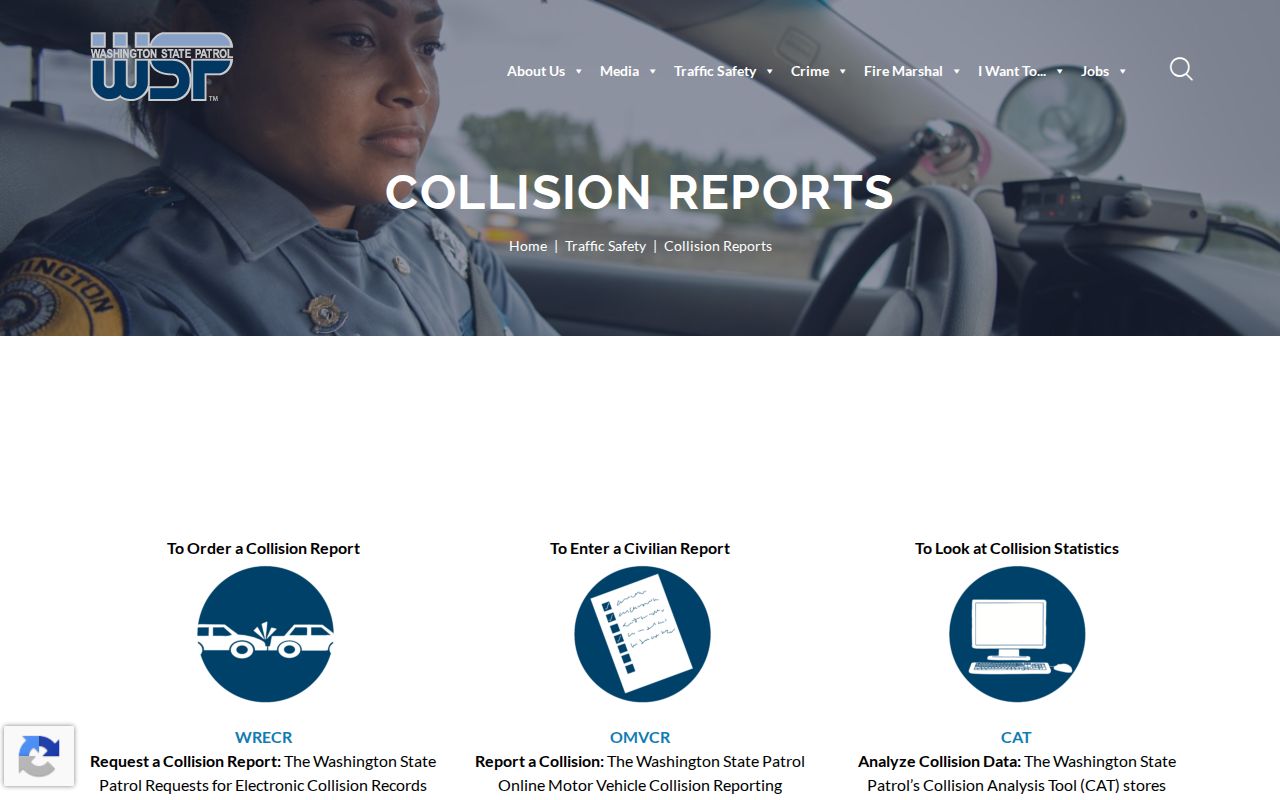
Start with the location, date, and responding agency. Then give the creator a narrow description, case number if known, preferred format, and delivery choice. Electronic copies can reduce paper charges. Investigative details, victim or witness data, juvenile information, and private identifiers may be redacted under the cited exemption.
- Sheriff report
- Send the request to the CCSO Public Disclosure Unit through GovQA or its printable form.
- City police report
- Use the records channel of the Vancouver, Camas, Battle Ground, or other responding city department.
- 911 and dispatch record
- Ask CRESA for call audio or computer-aided dispatch data rather than asking the officer's agency.
- Collision report
- Use the Washington State Patrol collision channel for the statewide record.
Restricted, Sealed & Vacated Records
Washington uses several distinct remedies. Vacating an adult conviction withdraws the judgment and dismisses the charge under a qualifying statute, but it does not promise that every trace is destroyed. Sealing limits access to a court record under the required legal standard and order. RCW 10.97.060 creates a separate path to seek deletion of qualifying nonconviction data from criminal justice agency files. Juvenile records follow different sealing and destruction rules.
Adult felony vacation is governed by RCW 9.94A.640. Misdemeanor and gross-misdemeanor vacation uses RCW 9.96.060. Eligibility depends on the exact offense, sentence completion, waiting period, pending charges, later history, and current law. Violent, sex, impaired-driving, and other listed matters can be excluded or treated differently. A charge label alone is not enough to decide.
Start with the judgment and full docket. Confirm that all sentence terms and legal financial obligations are complete, use current Washington Courts forms, file in the court that entered judgment, and obtain certified copies of any order. If an old result remains, identify whether the source is the Clerk, WSP, arresting agency, or a stale copy before seeking correction.
Clark County Therapeutic Court Records
Clark County's two trial courts support nine therapeutic programs. Adult Drug Court began in 1999 and marked 25 years in 2024 after reporting 781 graduates. Other named programs include Residential DOSA, Family Treatment Court, Safe Babies, Veterans Court, and DUI Court. Program participation creates its own hearings, reports, conditions, and docket events. Those entries should be read in context instead of being reduced to a generic conviction label.
The Clark County therapeutic court overview names the programs and their referral materials.
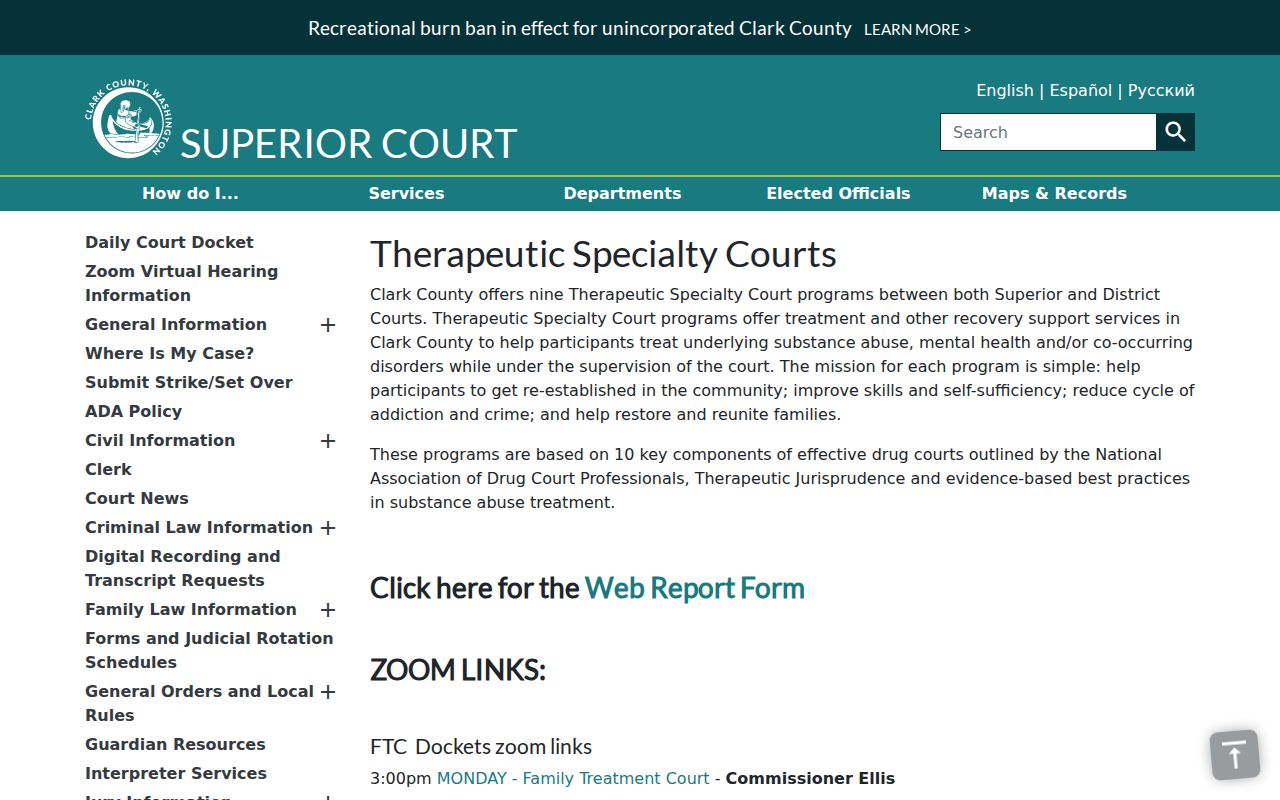
These dockets can show a path built around treatment and close review, not just a sentence line. Local supervision may continue with District Court Probation and Pretrial Services, whose probation page shows the Clark County office, programs, and current service location.
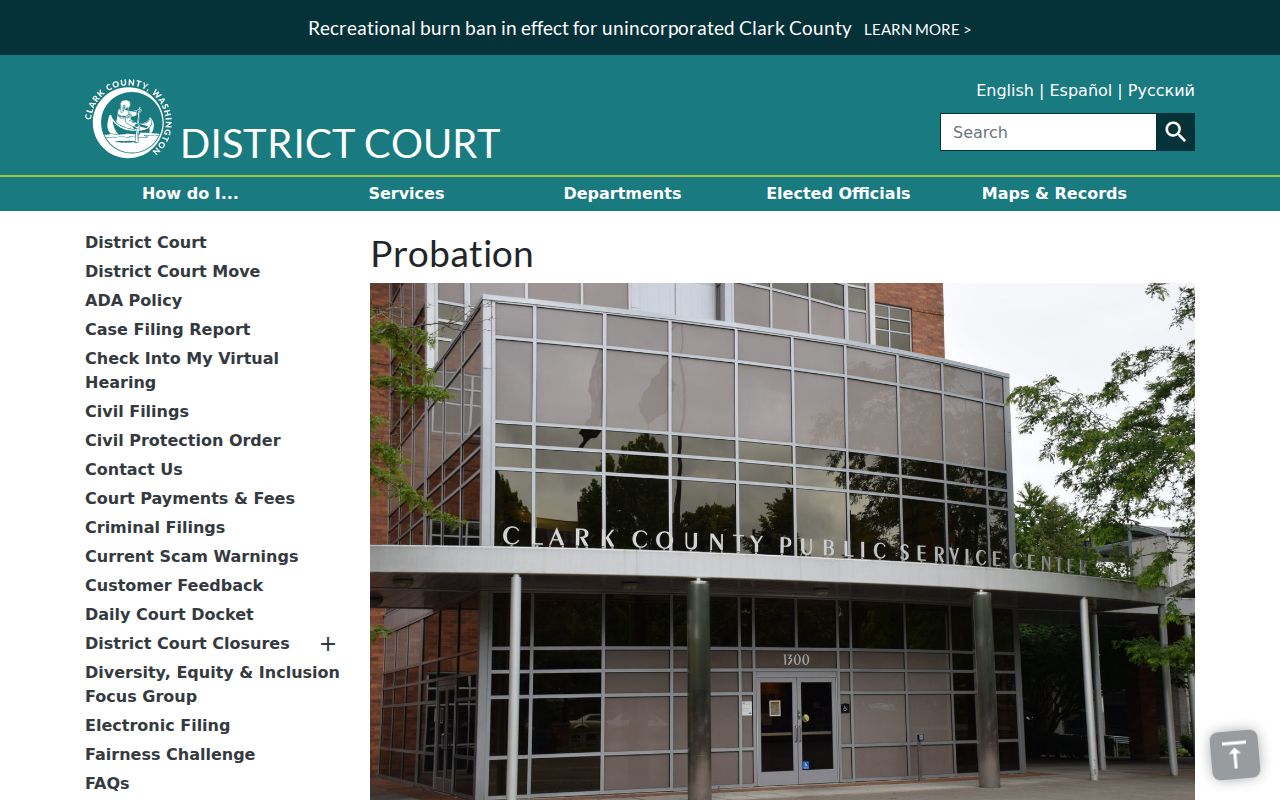
Pretrial supervision is not a conviction. Clark County uses recognizance, administrative, enhanced, and intensive levels before a case is resolved, while Washington DOC handles felony community custody.
City-by-City Criminal Records in Clark County
City police reports remain with the city that created them, even when the arrested person is booked at Clark Main Jail. Vancouver uses its city public-record portal and sends city misdemeanors to Clark County District Court. Camas uses its police records channel and shares the Camas-Washougal Municipal Court in Washougal. Battle Ground has separate city and Municipal Court record routes. These three incorporated cities are Clark County's largest under the official April 1, 2025 state estimates.
Vancouver Record Check
205,100 · VPD reports and Clark County District Court cases use separate channels.
Camas Record Check
27,970 · Camas Police records pair with the shared court in Washougal.
Battle Ground Record Check
22,790 · City JustFOIA excludes Municipal Court records.
Each city arrest still may create records at the county court, jail, and state repository. The city page stays focused on the local police and court doorway.
Clark County Arrests Reach WASIS
A Clark County arrest starts a chain rather than one master file. The officer's agency creates the report. Jail Services creates the booking entry and captures prints for a fingerprintable arrest. The Prosecuting Attorney decides what charges to file, and the court clerk opens the judicial file. After the case is resolved, disposition information is sent so WSP can connect the court outcome to the WASIS arrest cycle. Delays or missing transmissions can leave the sources out of sync.
The Clark County Prosecuting Attorney page identifies the office that reviews and prosecutes local criminal referrals.
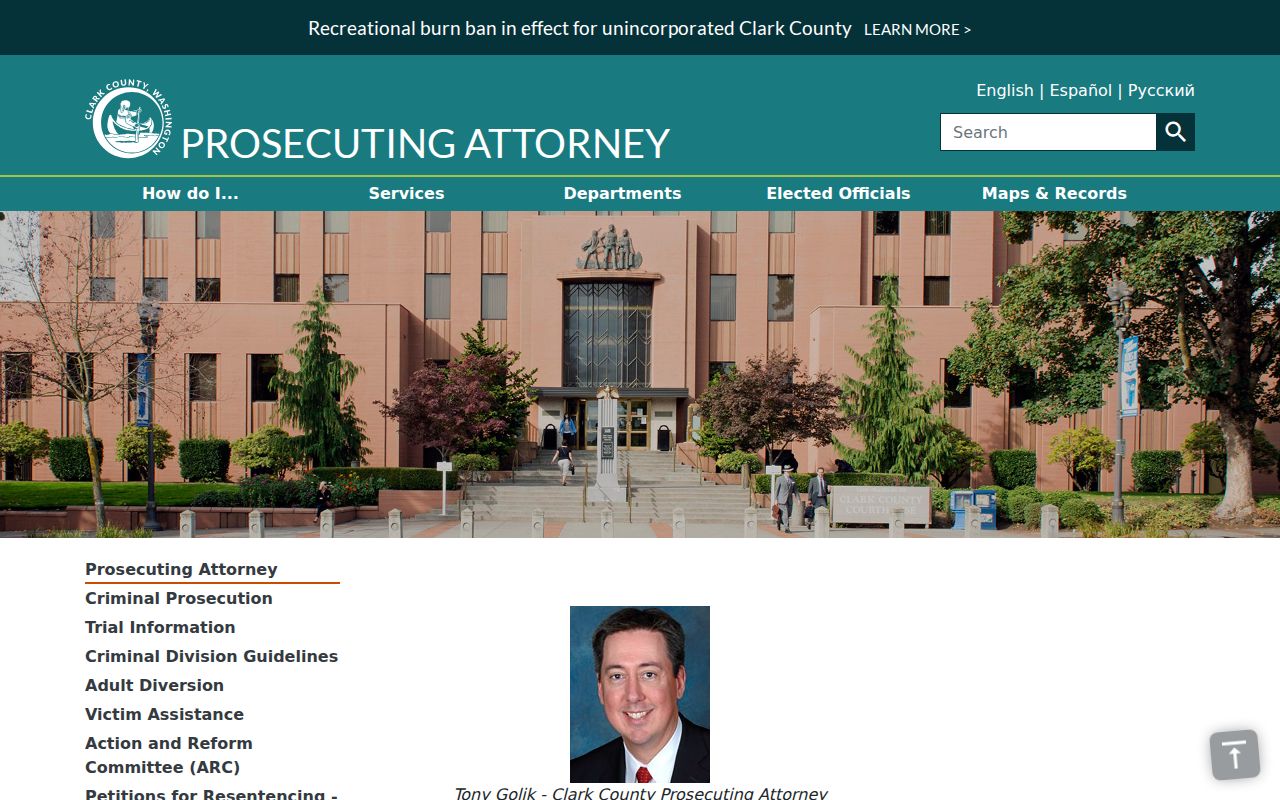
The basic flow is: Law enforcement report → Jail booking and fingerprints → Prosecutor filing decision → Court docket and disposition → WSP and WASIS update. Compare the final disposition count by count when an arrest charge and a court result do not match.
Note: WSP can correct repository data, but it may first require certified source documents from the reporting agency or Clark County court.